
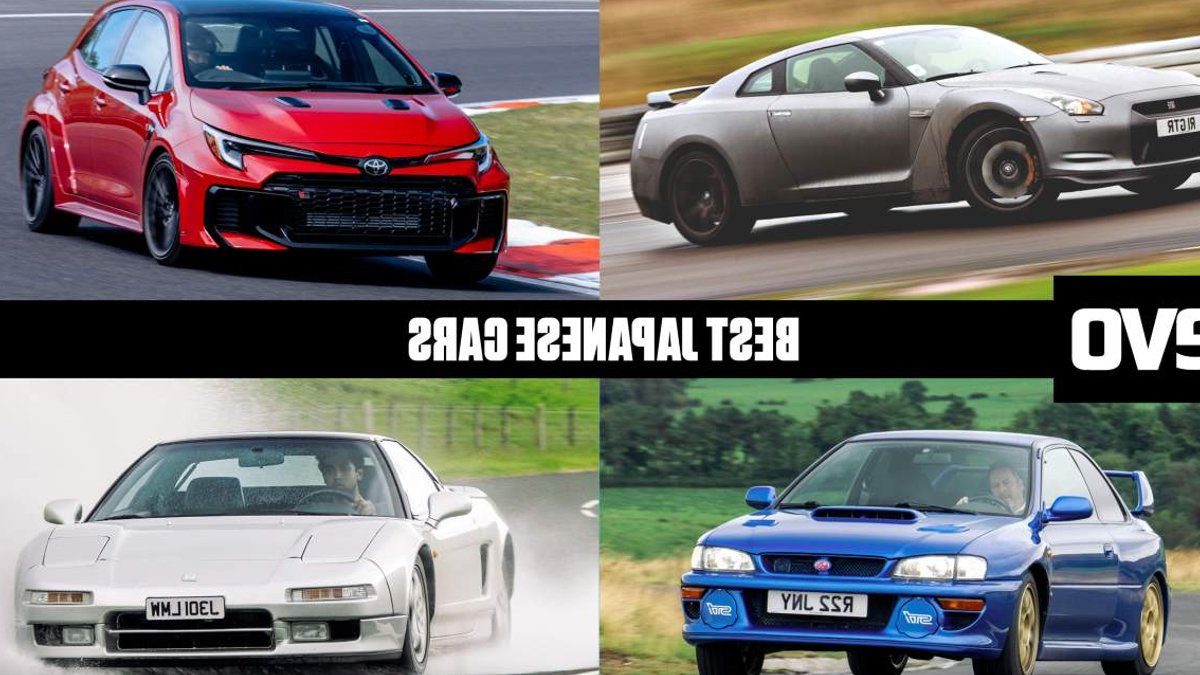
The Japanese automotive industry has created some of the most enduring performance cars in history, blending rigorous engineering with an unwavering focus on driver engagement. Unlike many modern vehicles that prioritize efficiency or technology, these cars emphasize raw feel and mechanical purity. Whether through rally-bred hot hatches, unconventional supercars, or lightweight roadsters, they resist the shift toward electrification and autonomy while maintaining their appeal over decades.
The Toyota GR Yaris exemplifies this philosophy. Though it entered the hot hatch segment late, its rally-derived heritage and continuous refinements—including a 276 horsepower three-cylinder engine and bespoke GR Four all-wheel-drive system—have established it as a benchmark. Its platform is a hybrid of a Corolla rear end and Yaris nose, a fusion that somehow outperforms its parent models.
The Nissan Skyline GT-R (R35) remains the gold standard for what patience and perfection can achieve. Its 2007 debut followed years of development, initially met with skepticism, but its 473 horsepower twin-turbo V6 and ATTESA E-TS all-wheel-drive system redefined production car capability. The GT-R didn’t just outperform the Porsche 997 Turbo on the Nürburgring; it did so with an analog feel that digital rivals couldn’t replicate. Even its infamous 7:38.54 lap time in wet conditions was conservative. Over nearly two decades, power increased to 562 horsepower, yet the car’s core identity, a driver-demanding brute, remained unchanged.
Mazda MX-5: The Timeless Back-to-Basics Sports Car
Not all Japanese performance icons rely on raw power. The Mazda MX-5 has spent over 35 years refining its lightweight, rear-wheel-drive formula. The current model’s 181 horsepower naturally aspirated engine may lack turbocharged rivals’ shriek, but its limited-slip differential and Bilstein dampers deliver a detox from modern automotive excess. Mazda’s refusal to compromise on its mission, a “lightweight, back-to-basics sports car”—has kept the MX-5 relevant despite the dominance of crossovers.
The Honda Civic Type R (FL5) showcases evolution within constraints. Its 324 horsepower turbocharged engine may lack the rev-hungry character of older K-series units, but under modern emissions rules, it remains impressive. The six-speed manual transmission, rare in an automatic-dominated era, offers feedback that even Porsche engineers might envy. The Individual mode in the suspension finally unlocked the Type R’s full potential, making it a touring-focused machine with aggressive cornering capabilities.
The Lexus LFA defies categorization entirely. Built when dual-clutch transmissions were trendy, it stubbornly retained a single-clutch paddleshift, a choice that felt outdated at launch. Yet its 552 horsepower Yamaha-tuned V10 and handcrafted interior made it a supercar for purists. The engine, in particular, feels like a lost art, something unlikely to be replicated. Even today, its £340,000 price tag seems extreme, but for those prioritizing sensation over data, it remains unmatched.
Rally-Bred Legends and Rule-Bending Engineering
Rally-bred roadsters like the Mitsubishi Lancer Evolution (TME) and Toyota Celica GT-Four highlight another facet of Japanese performance. The GT-Four’s air restrictor, closed for homologation but open at speed, was a masterstroke of rule-bending ingenuity. The Evolution’s RB5 iteration placed third in evo Car of the Year 1999, defeating the BMW M5 and Ferrari 360 Modena. Its warbling turbocharged flat-four and torque-splitting AWD set new standards for handling.
The Toyota GR Corolla represents the next step in Toyota’s rally-inspired performance lineage, though its absence from UK showrooms remains frustrating. Sharing the GR Yaris’ G16E engine, manual transmission, and GR Four all-wheel-drive, it adds 300 horsepower and 295 lb-ft of torque, outpacing its three-door sibling while offering five-door practicality. The platform’s fusion of a Corolla rear end and Yaris nose delivers sharper body control and a wider stance, making it more composed than either donor car.
The extra weight, over 200 kilograms more than the GR Yaris, is a trade-off for a hot hatch capable of handling backroads and urban driving without losing its aggressive edge. In an era where the Civic Type R, Focus ST, and i30 N have disappeared, the GR Corolla would fill the gap with rally DNA and everyday usability.
The Honda Integra Type R (DC2), its closest spiritual successor, proved nearly 30 years ago what obsessive engineering could achieve. The 187 horsepower B18C engine, capable of 100 horsepower per liter, was more than a powerplant; it was a symphony. Its redline-hungry revs and harmonic balance made it one of the most rewarding naturally aspirated four-cylinders ever built. The DC2’s chassis and transmission featured a limited-slip differential, multi-link suspension, and a six-speed manual—a rarity in the late 1990s. Back in 2006, it was declared the best front-wheel-drive performance car ever made, a claim still valid when compared to the FL5 Civic Type R.
Rotary Power: The Mazda RX-7’s Unmatched Driver Bond
The Mazda RX-7 (FD) embodies devotion to the rotary engine, a car so demanding it commands a cult following decades after production ended. Its 13B-REW twin-rotor engine, paired with sequential turbocharging, delivered 237 horsepower—modest by today’s standards but sufficient for the 1,310-kilogram chassis. What set it apart was the engine’s 6,500-rpm redline and warbling exhaust note, but more importantly, its interactive power delivery. Unlike forced-induction four-cylinders that spool instantly, the RX-7 required engagement, revving in gear, hunting for the torque sweet spot. The trade-offs were significant: high fuel consumption, maintenance demands, and a hand-wound throttle needing patience. Yet for its devotees, no other car, even the Porsche 911 or Ferrari 360—matched its raw, unfiltered driver connection.
The Honda NSX Type R (NA2), introduced late in its generation, proved Japanese performance cars could redefine themselves at the final hour. The 2002 facelift was more than cosmetic; it was a full engineering overhaul. A balanced engine assembly, hand-machined clutch components, and a shorter final drive sharpened the 276 horsepower V6’s in-gear responsiveness. Carbonfibre body panels and thinner glass trimmed weight without sacrificing rigidity.
The result? A car that lapped the Nürburgring in under eight minutes—20 years before the Lamborghini Huracán STO or Porsche Cayman GT4 RS—using tyres from the same era. The NSX Type R wasn’t just competitive; it set a benchmark for cohesion, proving perfection lies in the harmony of every component. In an industry increasingly obsessed with digital aids and efficiency, such uncompromising craftsmanship remains rare.


