
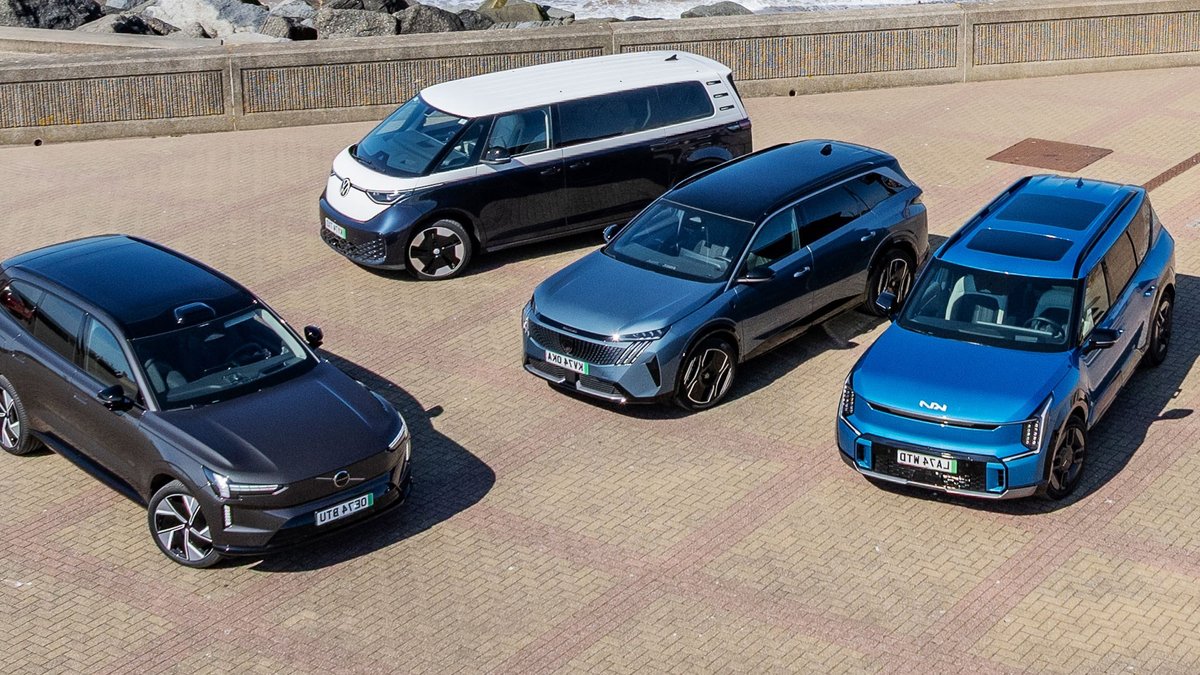
In early 2025, buyers of seven-seater electric vehicles faced only a few choices. By early 2026, the market had expanded significantly, offering options from affordable vans to high-end SUVs. This growth aligns with stricter emissions regulations and declining battery costs, which have made electric seven-seaters more practical for families and businesses. Some manufacturers converted existing electric vans into seven-seaters, such as Vauxhall and Citroën, while others introduced new electric SUVs like Hyundai and Volvo, which come with premium features and higher price tags.
The expansion of electric seven-seaters reflects broader industry trends. European governments have tightened emissions standards, compelling automakers to electrify their fleets. Advances in battery technology have also lowered costs and extended range, key considerations for those needing larger vehicles. As a result, the market now provides diverse options, balancing practicality with luxury.
Hyundai Ioniq 9 leads spacious electric seven-seaters
The Hyundai Ioniq 9 stands out as a dominant model in this segment. Measuring five meters long, it offers spacious seating for seven adults, supported by a 3-meter wheelbase and an 110.3 kWh battery. While its real-world range falls short of the advertised 385 miles—closer to 300 miles per charge—its fast charging and refined interior set it apart. Priced at £65,000, it undercuts competitors like the Volvo EX90, delivering strong value for its size and features.
For buyers who prioritize style over space, the Volkswagen ID.Buzz LWB provides a retro-inspired design with modern electric capabilities. The long-wheelbase version accommodates seven passengers, though practicality is compromised by the absence of individual rear seats. Its 86 kWh battery offers a claimed 293 miles of range, though real-world tests suggest around 230 miles. The GTX model accelerates from 0 to 62 mph in 6.4 seconds, matching the performance of a manual Golf GTI—a notable achievement for a vehicle of its size.
Budget-conscious buyers have alternatives as well. The Peugeot e-Rifter, starting at £31,600, is one of the most affordable options. Derived from the compact van platform shared with the Citroën Berlingo and Renault Kangoo, it emphasizes practicality over aesthetics. With a 199-mile range and a 30-minute 10-80% charging time, it benefits from the UK’s electric vehicle grant, further reducing its cost. Its compact size and sliding doors make it ideal for urban families or businesses needing rear cargo access, though its van-like styling and limited ground clearance reduce versatility on rough terrain.
Premium and budget electric seven-seaters compared
The Mercedes-Benz EQB balances compactness and premium features, though its driving experience leans toward heaviness. The front-wheel-drive 250+ model achieves 324 miles of range, while the four-wheel-drive 300 4Matic drops to 271 miles. Despite its leaden handling, the EQB’s refined ride and luxury touches justify its market position, even if it lags in efficiency compared to rivals.
Performance and practicality combine in the Kia EV9, which features a 379-horsepower twin-motor option and accelerates from 0 to 62 mph in 5.3 seconds. Its 349-mile range and 24-minute 10-80% charging time make it one of the fastest-charging seven-seaters available. Though its driving feel lacks excitement, the EV9’s polished interior and premium feel align with its £65,000 starting price.
The expanding variety of electric seven-seaters also reflects shifting priorities in the UK market, where some models are nearing the end of production. The Peugeot e-Rifter, for instance, is in its final iteration, with the 2024 model offering improved range and efficiency. Stellantis, Peugeot’s parent company, plans to phase out the e-Rifter by late 2026 in favor of updated electric van platforms. The Volkswagen ID.Buzz LWB, while still in production, will soon face competition from new electric vans with enhanced technology and design.
Reliability and charging speed matter most
For buyers concerned about long-term reliability, the Hyundai Ioniq 9 and Kia EV9 offer strong advantages. Both share an 800-volt architecture, enabling rapid charging at speeds up to 350kW, faster than many competitors. The Ioniq 9 benefits from Hyundai’s experience with electric platforms, including the proven e-GMP underpinnings used in the Ioniq 5 and 6, ensuring reliability and software refinement. The Kia EV9 delivers similar charging speeds and a performance-oriented twin-motor option, though its driving feel is less polished than the Ioniq 9.
The Volvo EX90 represents Volvo’s first fully electric seven-seater, arriving after delays tied to software and battery integration challenges. Unlike its petrol predecessor, the XC90, the EX90 emphasizes sustainability with recycled and bio-based interior materials. Its 111.3 kWh battery pack, shared with the Polestar 3, delivers up to 374 miles of range, though Volvo’s estimates suggest closer to 300 miles in mixed driving. The EX90’s advanced safety suite includes pilot-assist technology and a reinforced structure to minimize pedestrian injuries.
Despite its premium positioning, the EX90’s infotainment system has drawn criticism. Volvo’s minimalist approach, relying on a single touchscreen, has frustrated some drivers, particularly older ones accustomed to physical controls. The car’s ride quality, however, excels, offering a softer and more composed experience than many rivals. This makes it a strong choice for long-distance family travel. However, its starting price above £80,000 and slower charging speed, limited to 150kW DC, position it more as a luxury option than a practical one for most buyers.


