
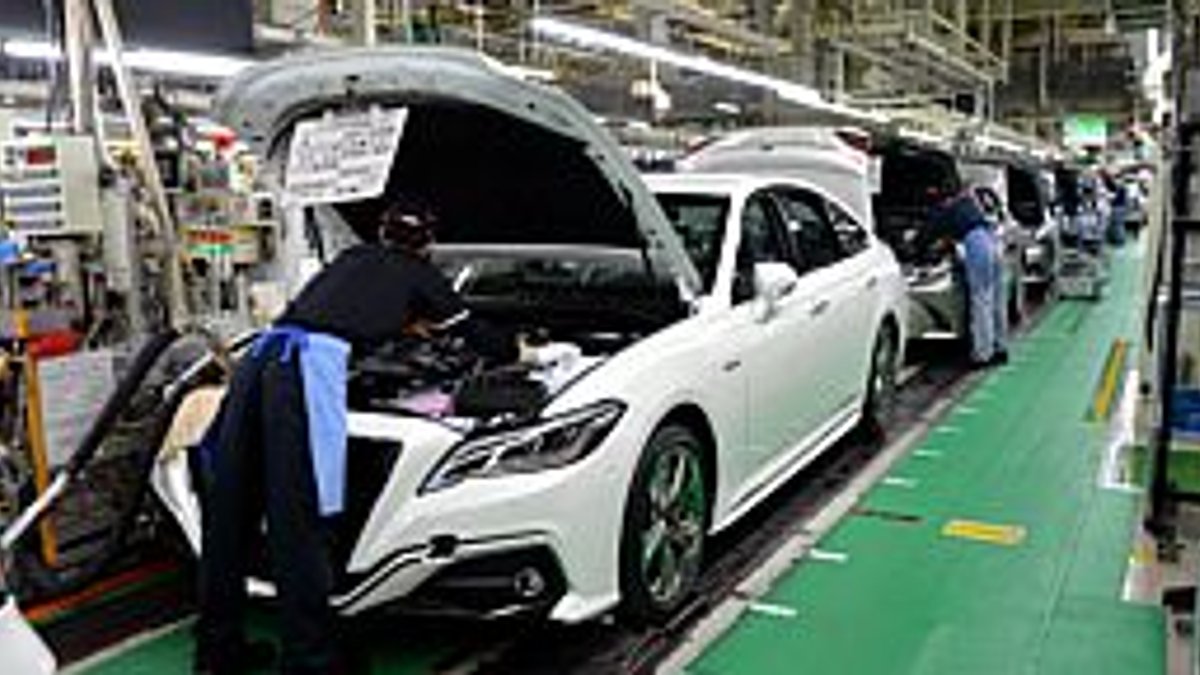
Toyota has again suspended vehicle production across Japan, halting 17 production lines at nine assembly plants just one day after the automotive giant restored output following a deadly magnitude-7.1 earthquake. The latest disruption stopped the manufacture of several models important to the Australian market including the LandCruiser 300 Series, LandCruiser 70 Series, RAV4, and HiAce, as well as several Lexus models. Toyota suspended both shifts across nine of its 14 Japanese assembly plants on 7 August as high winds and rough seas associated with Typhoon Dolphin disrupted maritime transport and logistics.
Models and facilities affected
Affected production also included the Corolla, Camry, Prius, and Crown range, along with the bZ and C-HR SUVs. Lexus production affected by the shutdown included the RZ and LBX crossovers and LX large SUV. Factories impacted included Toyota’s Motomachi, Tsutsumi, and Takaoka facilities in Toyota City, three Toyota Auto Body plants, and a Toyota Industries factory responsible for RAV4 production. Gifu Auto Body, which manufactures the HiAce van and Coaster bus, was also halted, while a Daihatsu factory in Kyoto suspended production for the day.
Related: XPeng returns to Australia with new models
The one-day shutdown is not expected to significantly affect vehicle inventories, with Toyota’s Japanese factories already scheduled to close for a week-long summer holiday from 13 August. However, the typhoon follows closely behind widespread disruption caused by a magnitude-7.1 earthquake that struck southern Japan on 28 July, killing 36 people and interrupting automotive supply chains.
Previous earthquake impact
Toyota’s Miyata Lexus factory in Kyushu was halted between 29 July and 5 August as a result of the earthquake, returning to production on 6 August. The Tahara plant, which produces the LandCruiser Prado alongside the Lexus GX, LS, IS and LM and other models, was also temporarily halted following the quake. Combined vehicle production losses associated with the earthquake are expected to approach 20,000 units.
Related: Step-by-Step: Secret Auto News for Pros – How to Stay Ahead of the Industry
Japanese automotive component giant Aisin was also affected by the earthquake, with damage to a factory producing door components, seat parts, sunroofs and aluminium engine components contributing to Toyota’s earlier shutdown. Alternative production arrangements subsequently allowed Toyota to restart affected factories. Semiconductor supplier Renesas Electronics, meanwhile, said disaster-planning measures introduced following Japan’s devastating 2011 earthquake and tsunami had helped it restore production rapidly.
“We have spent the past 15 years strengthening our business continuity planning, including earthquake-resistance measures, and our supply chain resilience,” said Renesas spokesperson Makie Uehara. “Renesas’ disaster response today is far stronger than in 2011.” Honda, however, continues to face a more significant interruption, with its Yorii and Suzuka assembly plants to remain offline until at least 19 August because of parts shortages associated with earthquake damage at suppliers. Honda is understood to be experiencing difficulties sourcing components including dampers from Honda-affiliated supplier Astemo. Despite the successive disruptions, Toyota’s latest one-day stoppage is understood to have limited impact on Australian supply.


