
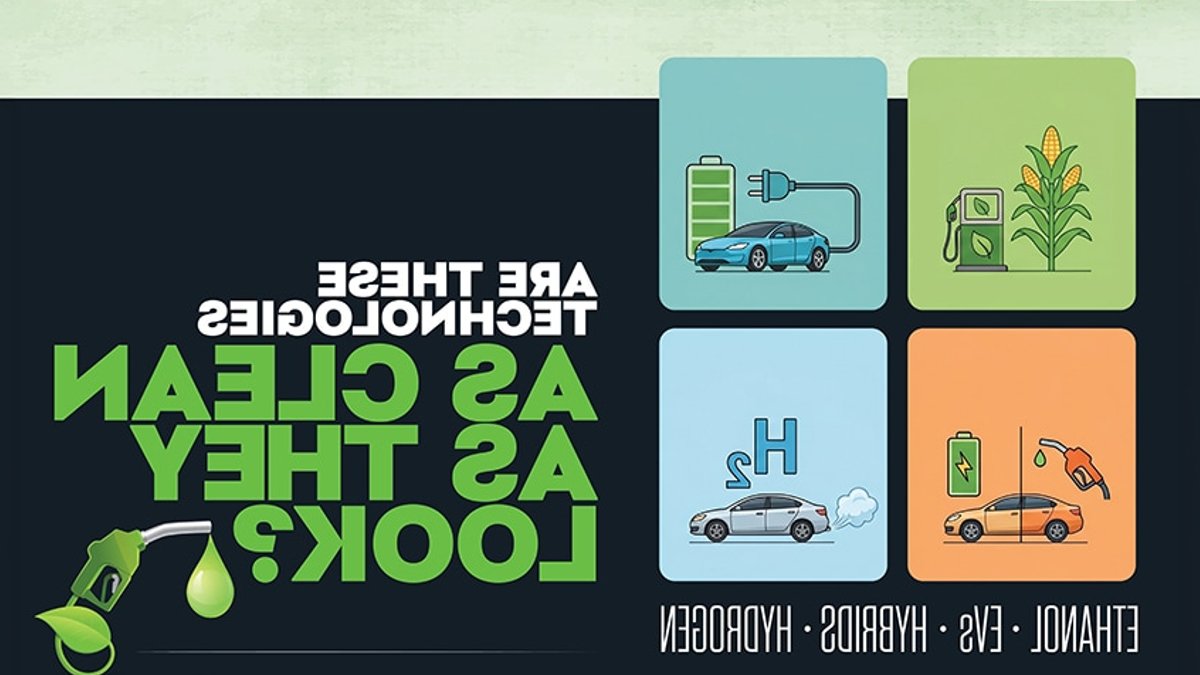
The automotive industry has been searching for a technology to replace fossil fuels and eliminate transport emissions for decades. Despite studies and research calling one technology “green”, there has always been a limitation attached to all of those. As research continues, debates get heated further, at times more than the ICE engines, which have been converting more heat energy than kinetic energy from the fuel it gulps down.
Global research from various research bodies, along with India’s leading engineering institutions suggest that the answer is far more complicated than a simple battle between electric and combustion power. When emissions are analysed from a lifecycle perspective, covering fuel production, vehicle manufacturing, operation and end-of-life disposal, every technology comes with its own set of drawbacks.
The technology that makes the most sense for specific applications, markets and infrastructure realities is no longer the question. Battery-electric vehicles, hydrogen fuel cells, ethanol-based flex-fuel engines, hybrids and compressed biogas have all emerged as contenders in the race toward cleaner mobility.
Battery-electric vehicles are often positioned as the cleanest form of mobility, and in cities, that argument is difficult to dispute. The IIT Kanpur Engine Research Laboratory highlights ‘zero tailpipe emissions’ as the biggest advantage for battery-electric vehicles. This reduces harmful particulate matter, PM 2.5 and Nitrogen Oxides in densely populated metros and urban areas.
The research also shows that these vehicles are better as they convert more than 75% of supplied energy into motion and hence are way more efficient than conventional internal combustion engines, which lose almost 70% of energy as heat. However, the debate becomes more complex when the electricity powering these vehicles is examined.
Related: Maserati revives manual V6 and V8 engines for petrol fans
IIT Kanpur performed a lifestyle assessment and found that under Indian conditions, battery-electric vehicles generate between 15 to 50% higher life cycle greenhouse-gas emissions than strong-hybrid vehicles. The main reason here is India’s electricity generation mix, where thermal power plants continue to account for a substantial share of power generation.
Globally, however, the picture is much better. According to the International Energy Agency, of which India is also an associate, a battery-electric vehicle emits roughly two-thirds less greenhouse gases over its lifetime than its equivalent ICE counterpart, but only in areas with cleaner electricity grids.
Hydrogen combustion engines, although rudimentary, were invented long ago in the 1800s. NASA had used Hydrogen Fuel Cells in its space missions, and the biggest selling point is that it expels water vapour.
However, hydrogen also suffers from some serious issues. Firstly, hydrogen has extremely low volumetric energy density, and requires very high compression to pressure for automotive use.
The conversation that has gained traction is about flex fuel. The Union Minister of Road Transport and Highways, Nitin Gadkari, has been an advocate for the accelerated adoption of E20 fuel with constant efforts towards increasing the ethanol percentage.
Unlike battery-electric vehicles and hydrogen, flex-fuel vehicles leverage existing infrastructure while offering an immediate pathway to reducing crude oil imports. Hence, this has a lot of supporters saying that ethanol improves energy security and, in turn, allows building a stronger rural economy and reduces petroleum dependence.
Related: Choosing Between Honda NX500 and RE Himalayan
Hybrids are simply a middle ground between conventional ICE vehicles and battery-electric vehicles. Recent Indian research from IIT Kanpur suggests they may deserve greater attention, and they are. The IIT Kanpur lifecycle assessment concluded that strong hybrid electric vehicles currently offer the lowest overall carbon footprint under India’s existing energy infrastructure.
Strong hybrids routinely deliver 40 to 50 per cent better fuel economy than equivalent petrol-powered vehicles in urban traffic, offering substantial reductions in fuel consumption without requiring charging infrastructure. With the current economic situation and ever-increasing fuel prices, hybrids are the dark horse in this conversation, and probably the only practical solution.
The evidence from Indian and international research bodies points to a common conclusion: no mobility technology is completely emission-free when assessed on a full lifecycle basis. Rather than searching for a single winner, policymakers and manufacturers may need a portfolio approach. Battery-electric vehicles could dominate urban mobility. Hydrogen may power heavy transport. Hybrids can deliver immediate emissions reductions. Ethanol and biogas can strengthen energy security and reduce dependence on imported oil.
The future of mobility may not belong to one fuel. It may belong to all of them. As the International Energy Agency notes, a combination of different technologies and fuels will be needed to achieve a low-carbon transportation sector. This requires a detailed understanding of the strengths and weaknesses of each technology, as well as the development of supportive policies and infrastructure.
In the end, the key to a cleaner and more sustainable transportation sector will be an approach that takes into account the complexities of the issue and the need for a range of solutions. By working together and leveraging the strengths of different technologies, we can create a better future for mobility and for the environment, and this is where petrol variants can play a role.


