
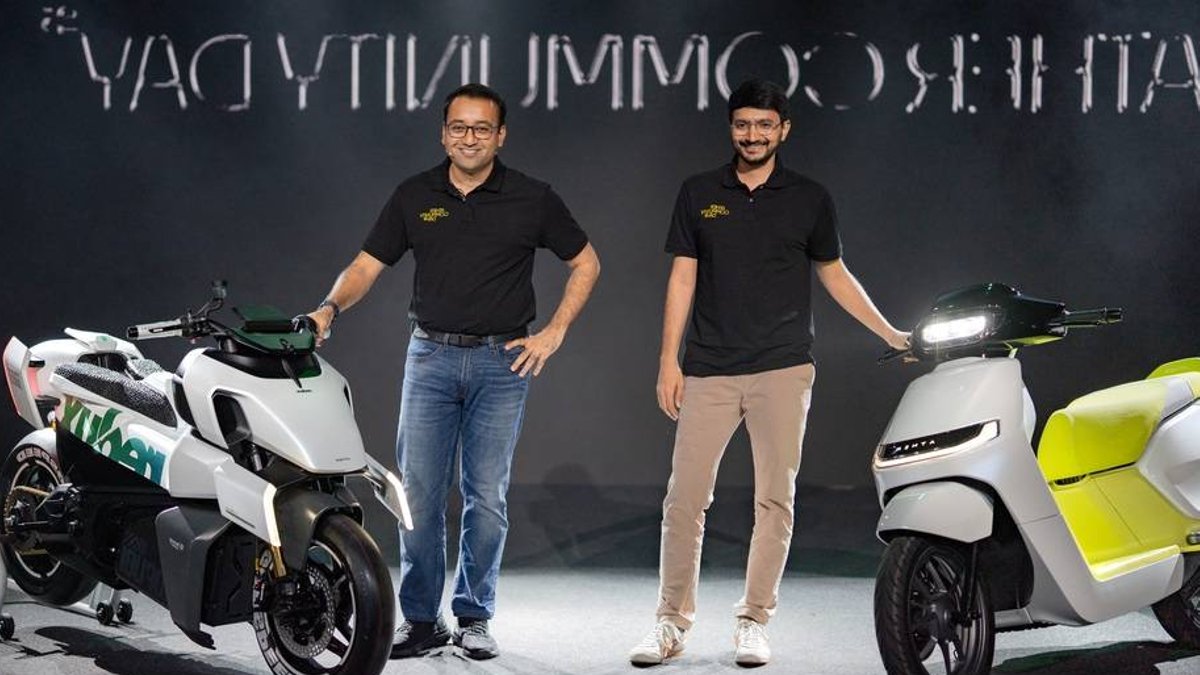
Ather introduced Ather Stack 7, its newest electric scooter operating system, at Ather Community Day 2025 in Bengaluru. The update draws on data from 760 crore kilometers logged by 4.5 lakh customers, incorporating features designed to enhance rider safety, ease of use, and real-time interaction. This vast dataset—equivalent to nearly 19 times the Earth’s circumference—helps identify recurring hazards and optimize system responses across diverse urban environments.
Real-time road hazards and voice alerts
The system now issues pothole warnings for major cities, including New Delhi, Bengaluru, Chennai, Hyderabad, and Mumbai. Riders get alerts about uneven surfaces in real time. When paired with Ather’s new Halo helmet, voice guidance directs them away from trouble spots. Warnings appear on the scooter’s screen and through phone notifications. The alerts are prioritized based on severity, with critical potholes triggering immediate vocal warnings while less severe patches appear as on-screen notifications. The system also cross-references traffic patterns to suggest alternative routes when hazards are unavoidable.
Additionally, the software identifies tow zones or restricted parking areas when riders park. A notification displays on the phone and is spoken aloud, helping avoid penalties or vehicle removal. This relies on sensor inputs and mapping data integrated into the scooter. The system verifies parking rules against municipal databases, including temporary restrictions for events or roadworks, ensuring riders stay updated even when local signage is unclear. Voice alerts for parking violations include the fine amount where applicable, sourced from city-specific traffic regulations.
For weather-related risks, the system adjusts traction settings automatically based on conditions like rain. Riders receive on-screen prompts and verbal alerts, reducing slip hazards or loss of control. The traction adjustments are calibrated using real-time weather APIs, which account for factors like road temperature and humidity to prevent overcompensation. Wet-weather mode also temporarily reduces top speed to improve stability, with a visual indicator showing when the system is active.
Natural language navigation and beyond
Navigation has been streamlined with support for everyday language. Riders can now say things like “Take me to the gym” or “Head to the nearest mall,” and the scooter processes the request without strict phrasing rules. This removes the need for technical commands, making operation more straightforward. The system interprets regional dialects and slang, including terms like “market” for grocery stores or “station” for train stops, adapting to local vernacular. Accuracy improves with usage, as the OS learns from rider corrections and common destinations.
Cricket enthusiasts benefit from live score updates while stationary. The scooter’s display shows ongoing matches when idle, turning wait times into entertainment. The feature pulls from official cricket data streams to ensure accuracy. Updates include ball-by-ball commentary for major leagues, with audio playback available via the scooter’s speakers when paired with the Halo helmet. Match highlights and player statistics are also displayed during traffic stops, integrating seamlessly with the navigation screen.
The update’s effectiveness hinges on user-reported data, particularly for pothole alerts. Over time, the system may improve as more riders share real-world conditions. For now, these changes mark a move toward more intelligent electric scooter software. The data collection is anonymized and aggregated, with riders optionally contributing by enabling a toggle in the app. Ather emphasizes that no personal location history is stored beyond the immediate alert period, addressing privacy concerns.
Other refinements include smart battery management, which optimizes charging cycles to extend range. The system also introduces predictive maintenance alerts, notifying riders when service is needed based on usage patterns. These additions complement the safety and convenience upgrades already rolled out. Battery optimization now includes adaptive charging profiles, adjusting current based on ambient temperature to prevent degradation. Maintenance alerts are triggered by factors like brake wear detected via vibration sensors or tire pressure drops, with step-by-step repair guides linked directly from the scooter’s interface.


