
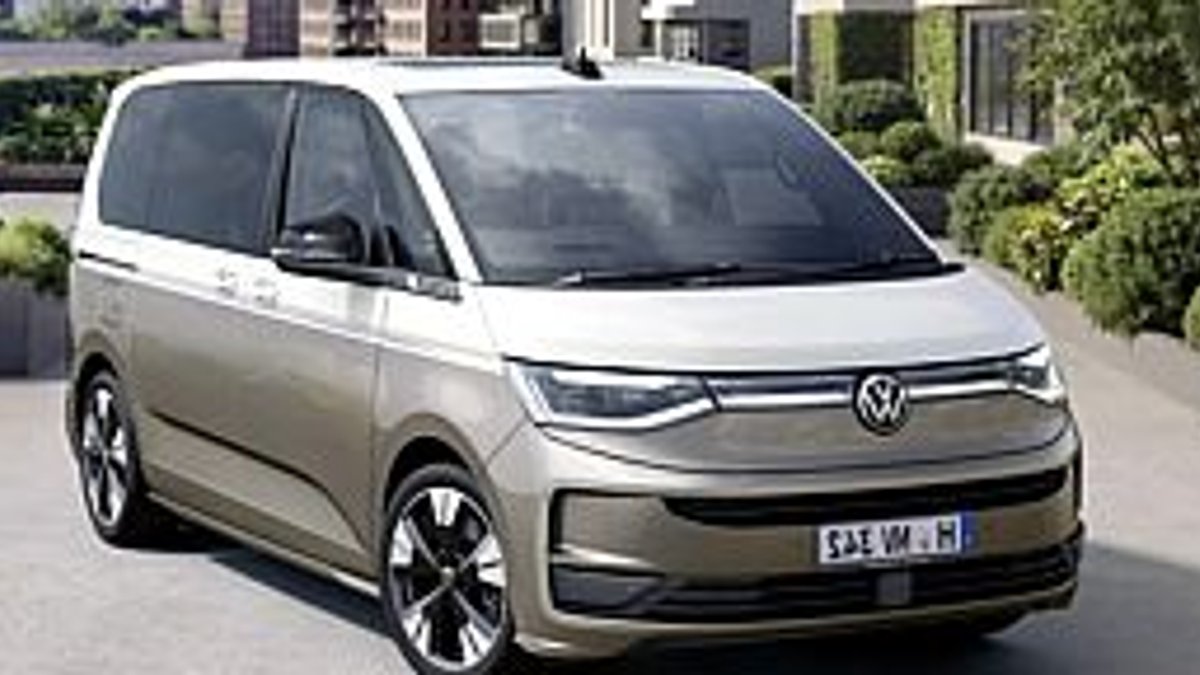
Volkswagen plans to reintroduce its 4Motion all-wheel-drive system to the Multivan in 2027, combining it with a new plug-in hybrid powertrain as part of a mid-cycle update for the vehicle.
The 4Motion system, missing from the current T7 generation, will be a central feature of the refresh scheduled for the second quarter of 2027. It will come standard on the plug-in hybrid version, which the company expects to become the model’s top-selling option.
The hybrid setup pairs a 1.5-litre turbocharged four-cylinder engine with electric motors on both axles, delivering a combined 180kW and 350Nm. A 19.7kWh battery offers an estimated 90km of electric-only range, though local figures for Australia are not yet available.
Michelle Rowney, head of product and marketing for Volkswagen Commercial Vehicles, stated the hybrid and all-wheel-drive combination would attract buyers seeking versatility, especially those traveling to snowy or remote locations. “Our customers value the 4Motion system in our vans,” she said. “The plug-in hybrid version will include it, and we see that as an essential part of the lineup.”
Diesel engines will still be offered despite stricter emissions rules under Australia’s New Vehicle Efficiency Standard, which fully takes effect in 2027. Volkswagen has not revealed expected sales splits between diesel and hybrid models but noted rising interest in plug-in hybrids among Australian customers.
Recent fuel price increases have also made electrified options more appealing, though the company did not suggest diesel would disappear entirely.
The 2027 update introduces exterior and interior refinements, new trim levels, and additional color and wheel choices. The California camper variant returns, featuring a pop-top roof for what Volkswagen describes as an adventurous design.
Related: Why Diesel Cars Are Rapidly Losing Popularity
A limited-run Edition variant, capped at 300 units, is priced at $79,990 before on-road costs.
Volkswagen has downplayed competition from Chinese brands like the GAC M8, Zeekr, and Xpeng X9, arguing Multivan buyers do not consider those models. Instead, it compares itself to the Ford Tourneo, Kia Carnival, Hyundai Staria, and Mercedes-Benz Vito Tourer.
The difference lies in practicality. The Multivan’s flat floor and modular seating allow individual seats to be removed, creating up to 3,672 liters of cargo space. That adaptability, Rowney explained, distinguishes it from Chinese rivals, which often lack similar flexibility. Buyers interested in an electric people mover, she added, are more likely to choose Volkswagen’s ID.Buzz over the Multivan.
Sales for the Multivan remain stable but lower in a crowded market. The 2027 update seeks to reverse that by emphasizing the qualities that have defined the model for years—practicality, versatility, and a renewed focus on hybrid efficiency and off-road capability.
The approach reflects a broader industry trend toward electrification, though Volkswagen’s strategy remains measured. Diesel options will stay available while hybrids serve as a transitional solution. This acknowledges Australia’s charging infrastructure and buyer preferences, where plug-in hybrids have gained ground faster than fully electric vehicles in some segments.
Success for the updated Multivan will depend on how well it manages competing demands—efficiency, capability, and the spacious design that has always set it apart.
Diesel’s decline in popularity has accelerated in recent years.


