
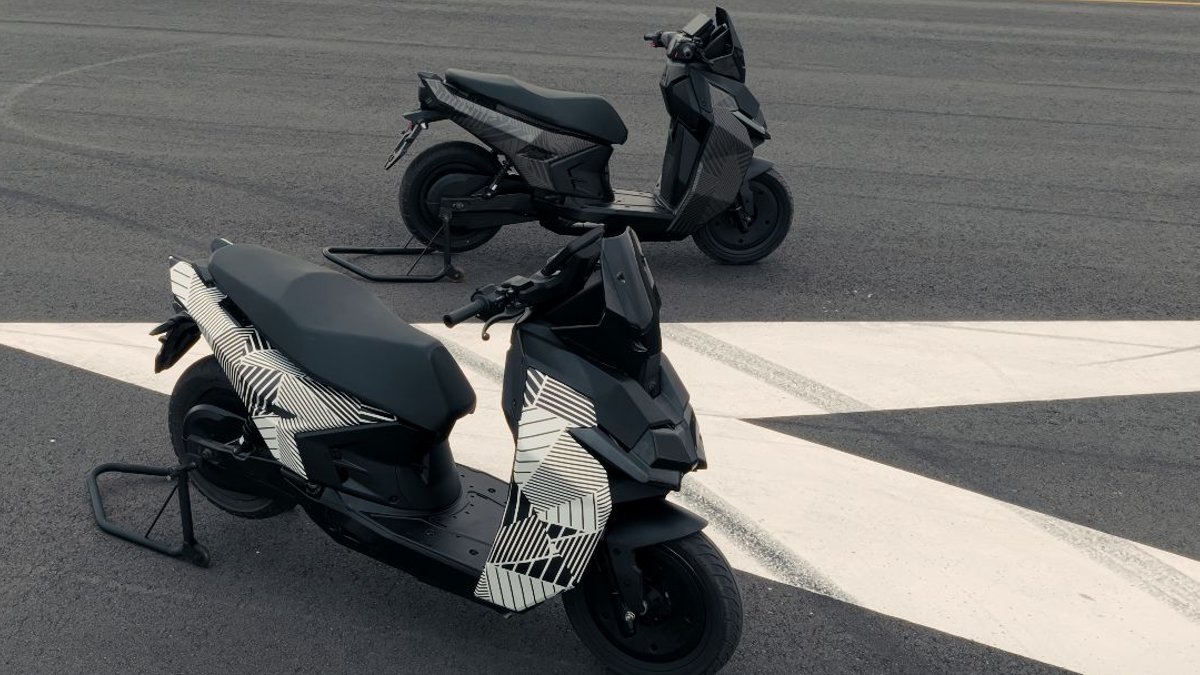
Ultraviolette has moved the launch of its Tesseract e‑scooter to January 2027, citing a major redesign that introduces India’s first 100‑volt architecture.
Why the timetable shifted
The firm says the new voltage system delivers a sustained 15 kW power output and cuts charging time in half. Engineers also report a lighter motor controller, dropping from roughly six kilograms to 2.5 kg, which improves thermal efficiency.
Customer feedback gathered at nationwide showcases prompted tweaks to the ergonomics. The pillion seat is now larger, and the floorboard has been elongated but narrowed to better fit shorter riders and even pets. The energy pack under the deck incorporates an axial thermal management system, preserving the 15 kW target while keeping heat in check.
Beyond the powertrain, the higher‑voltage platform enables a noticeable lift in load‑carrying capacity, allowing riders to transport heavier cargo without compromising acceleration. The reduction in component mass also translates into lower rotational inertia, which smooths the power delivery during rapid starts and deceleration. By consolidating several subsystems onto a compact board, the engineering team has minimized internal resistance, further enhancing overall efficiency.
Ultraviolette’s decision to postpone the rollout reflects a deliberate effort to validate these gains through extended durability testing. The company has leveraged data collected from its roadshow program to fine‑tune suspension geometry and frame rigidity, ensuring that the scooter can withstand the varied road conditions found across Indian cities. This iterative approach, driven by real‑world user input, aims to deliver a product that feels both refined and resilient when it finally reaches the market.
Technical specifications and features
Standard equipment will include 14‑inch wheels, anti‑lock brakes, traction control, hill‑hold assist and switchable regenerative modes. Both cloud‑based and offline AI systems are planned, along with radar‑based safety technology similar to that used on the X‑47 electric motorcycle.
Three energy pack sizes are slated for release: 3.5 kWh, 5 kWh and 6 kWh, offering ranges from 162 km to 261 km on a full charge. The pricing target for the smallest configuration is Rs 1.45 lakh.
Production will shift to a new Karnataka facility, where monthly capacity is set to rise from 500 units to 1,500 units for both two‑wheelers and the upcoming model.
Related: Volkswagen Taigun Facelift Tested on Long Journeys
The dual AI architecture is designed to accommodate differing connectivity scenarios. When a stable internet link is available, cloud‑enabled algorithms can receive over‑the‑air updates that refine motor torque curves and adapt regenerative braking profiles. In areas with limited network coverage, an offline AI core retains essential control logic, guaranteeing consistent performance without reliance on external servers. Radar sensors positioned around the scooter continuously map nearby obstacles, feeding data to both AI modules to trigger pre‑emptive braking or lane‑keeping assistance.
Wheel dimensions have been chosen to balance agility with ride comfort; the larger diameter helps absorb pothole impacts while maintaining a compact footprint for urban maneuverability. Safety features such as anti‑lock braking and traction control are integrated at the hardware level, providing a baseline of protection across every variant. Hill‑hold assist smooths the transition from standstill on inclines, a common scenario in densely populated neighborhoods.
Performance claims
During a private demonstration, the Tesseract reportedly outpaced several electric and internal‑combustion rivals, including the Ather 450, Yamaha Aerox and Aprilia SR 150, in a short‑distance sprint. It was also benchmarked against 150 cc performance machines with a passenger, emerging as the quickest in that test.
The company has already logged more than 70,000 bookings, indicating strong market interest despite the postponement.
Test drivers noted that the scooter’s acceleration felt linear even when carrying a passenger, a sign to the stable power curve maintained by the new voltage architecture. The regenerative braking system offered multiple selectable levels, allowing riders to prioritize energy recovery or deceleration feel according to personal preference. During the sprint, the radar‑based safety suite remained passive, demonstrating that performance metrics are not compromised by the added sensor package.
Benchmarking methodology included timed runs on a standard city circuit, repeated under identical load conditions to ensure comparability. The Tesseract’s ability to sustain its top speed over the measured distance, while keeping battery temperature within optimal limits, shows the effectiveness of the axial thermal management strategy.
While the delay may frustrate eager buyers, it reflects a strategic decision to ensure the model sets a new benchmark for electric two‑wheelers. By adopting a higher voltage platform, the firm aligns with global trends toward faster charging and lighter components, which could influence future designs across the sector.
Analysts note that the shift to 100 V could simplify supply chains, as many components are already standardized around that level in other vehicle categories. This may help manufacturers scale production more efficiently once the new facility reaches full output.


