
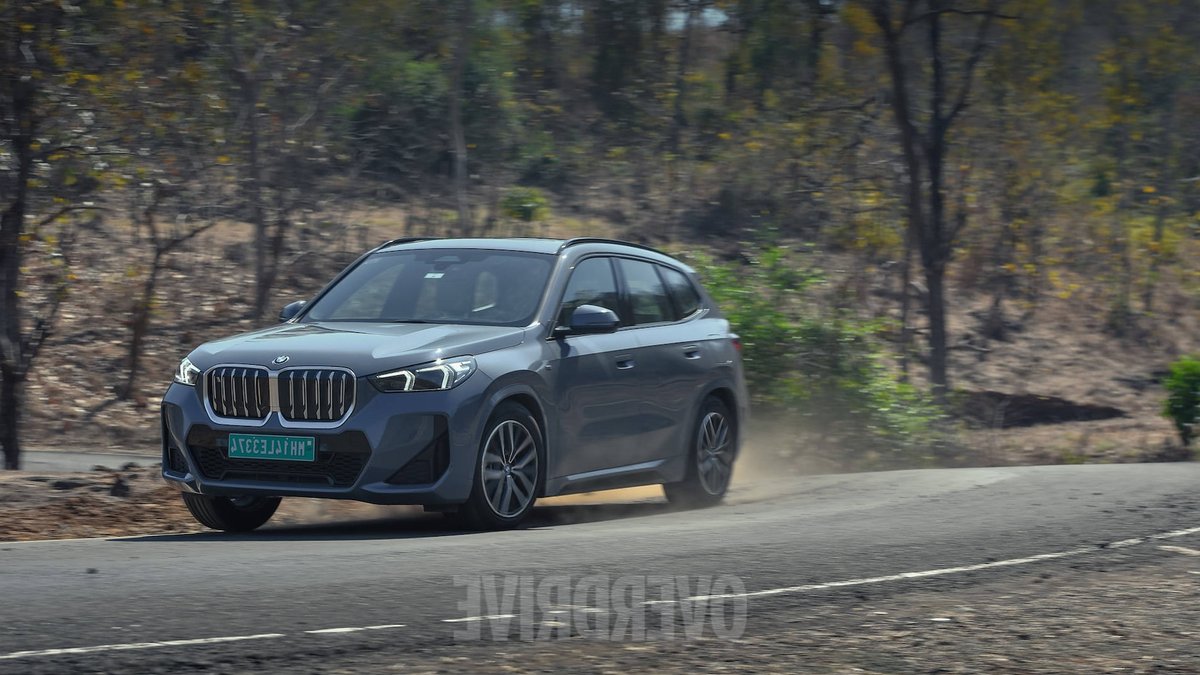
The 2024 BMW iX1 is the automaker’s newest electric compact SUV. It shares design and hardware with the internal combustion X1 but introduces electric-specific adjustments.
The iX1’s design mirrors the X1 with subtle electric updates
Following the theme of not jarring you into this new form of mobility, the BMW iX1 is hard to distinguish from the regular X1 at first glance. The most noticeable change is the blanked-out grille, which in this M Sport version still mimics that of an ICE BMW, paired with blue accents on the badges. The SUV carries a good deal of presence with its upright stance and expressive face, though it sits 13mm lower, enhancing its hunkered-down appearance.
Rear lights feature the same 3D detailing as the X1, while black cladding reduces the SUV’s visual bulk. The 19-inch M Sport wheels contribute to the sporty aesthetic, though reduced ground clearance requires careful navigation over speed breakers. The spare wheel is now stored inside the 490-liter boot, slightly reducing cargo capacity.
The cabin balances familiarity with electric-specific details
Inside, there’s little to tell the BMW iX1 apart from the X1 aside from the blue badges and the small “B” mode for the gear selector. The asymmetric dashboard remains one of the segment’s most distinctive designs, though vent placement may hinder rear cooling.
Light beige upholstery and an open center console create a spacious feel. Storage is abundant but not always practical—the top compartment is too shallow for larger items, and most cubbies lack secure lids. The vertical wireless charger stands out, keeping phones visible and secure.
Material quality is a highlight. Soft-touch surfaces feel more luxurious than competitors in this price range, and metallic accents feature unique textures—dotted on the dashboard, grated on speaker covers, and chamfered on the gear selector. The remaining physical buttons provide satisfying tactile feedback.
The tech setup matches the X1’s, featuring a 10.25-inch digital driver’s display and a 10.7-inch touchscreen. Electric-specific readouts integrate smoothly, and while the touch-heavy interface requires adjustment, it remains more intuitive than many luxury rivals. Wireless Apple CarPlay and Android Auto now function more reliably, though some features, like climate control, still demand familiarity.
Rear seat comfort is strong. The floor sits slightly higher than in the ICE X1, but thigh support remains adequate. The spacious cabin, large quarter glass, and reclining backrests make long trips comfortable for two adults. A third passenger can fit, though the central tunnel makes it less ideal. The absence of a dedicated phone slot in the center console is an odd oversight.
Range and charging meet expectations
The iX1 offers a WLTP range of 440 km. Efficiency benefits from a well-calibrated regenerative braking system, even in its lowest setting, and an Eco mode that doesn’t feel restrictive.
Related: aa
Buyers comparing the iX1 to its diesel counterpart will notice trade-offs. The electric version sacrifices some long-range capability but offers instant torque and a more engaging drive.
The iX1 avoids feeling like a compromise. It delivers comfort and engagement without sacrificing practicality, a balance many electric SUVs struggle to achieve. For those hesitant about electric vehicles due to range concerns or dull performance, this compact BMW might change their perspective.
Performance exceeds expectations
The iX1 accelerates from 0 to 100 km/h in 5.3 seconds. Rolling acceleration times—0.8s from 30 to 50 km/h, 1.0s from 50 to 70 km/h, and 1.2s from 60 to 80 km/h—are among the quickest in its class.
A boost mode unlocks full power in 10-second bursts, adding excitement without overwhelming the driver. Even in Eco mode, the iX1 feels responsive in traffic and on highways. It maintains strong acceleration at higher speeds, making overtaking effortless.
One-pedal driving in “B” mode becomes intuitive with practice, though it’s less effective in stop-and-go traffic. The regenerative braking is well-tuned, with Level 2 providing an engine-braking feel similar to a gasoline car. The only drawback is the lack of artificial sound, which reduces some of the drama found in the i4.
The iX1 excels in ride and handling. BMW preserved the X1’s balance of comfort and control, a rare achievement in electric vehicles. The suspension absorbs rough roads without harshness and transitions to a stable feel at higher speeds. Steering is direct and responsive, though the iX1 lacks the fluidity of a rear-drive BMW. It still outperforms the diesel X1 when pushed through corners.
The battery’s weight becomes noticeable in tight turns, but minimal body roll keeps the SUV stable. Braking is linear and natural, completing a driving experience that is both engaging and reassuring.
Choosing between the iX1 and its gasoline sibling depends on individual priorities. The diesel X1 provides more range and a lower upfront cost, but the electric version offers sharper performance, better handling, and the low-maintenance benefits of an EV. It retains the practicality and luxury expected from a BMW, making it a strong contender in its segment.
The latest hybrid models face similar trade-offs, though the iX1’s electric powertrain sets it apart.


