
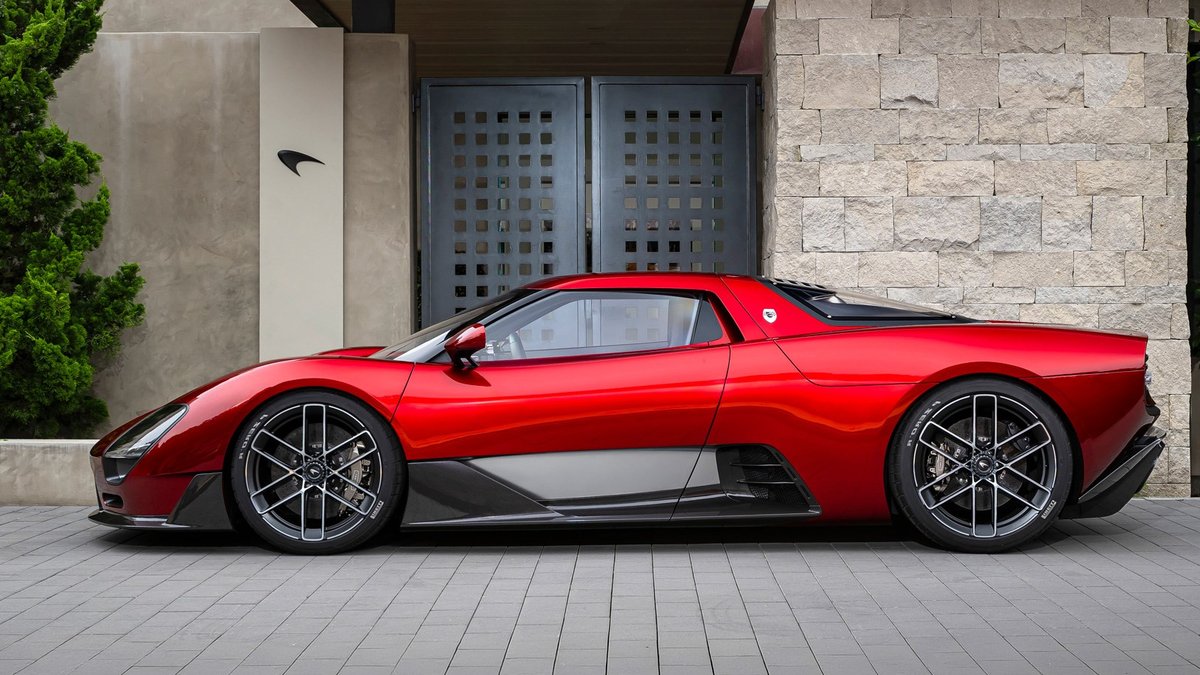
McLaren Automotive is no longer just a racing brand. After years of financial struggles and a near-constant battle to turn a profit, the company is being transformed by its new Abu Dhabi owners, who have committed £1.5 billion to modernize its operations and expand its product lineup. This shift arrives 16 years after the company’s road-car division separated from its Formula 1 racing heritage.
The turning point came when McLaren’s leadership acknowledged that its core business—hand-built supercars—could not sustain the company alone. While models like the 750S and Artura remain technologically advanced, the company accumulated £1.6 billion in losses between 2020 and 2024. According to Nick Collins, who became CEO in May 2025, the solution lies in entering adjacent market segments, particularly SUVs.
McLaren had previously rejected SUVs, arguing they clashed with its brand identity and shared little with supercar production. However, competitors like Lamborghini, Aston Martin, and Ferrari had already launched SUVs, the Urus, DBX, and Purosangue, and seen their sales and profitability rise. The Urus accounted for almost three quarters of Lamborghini sales last year, and the writing was on the wall.
Read Also: Hyundai reveals new Tucson design
McLaren’s bold shift into SUVs
The upcoming SUV, expected to debut as a hybrid performance model, will mark a departure from McLaren’s traditional approach. Unlike its supercars, which use carbon-fiber monocoques, the SUV will likely feature a different body structure and may even be built at a separate facility. Collins has also suggested front-engine models, including a potential GT, to broaden McLaren’s appeal beyond its core buyers.
This expansion is not just about increasing sales but stabilizing the business. Under Collins, McLaren shifted from a push-based sales model, where aggressive targets led to unsold inventory and weakened resale values, to a demand-driven approach. Sales dropped from a 2018 peak of 4,806 units to around 2,000 annually, but residual values have since strengthened, restoring customer confidence.
New owners free McLaren for long-term gains
The new owners, L’IMAD, a Middle East sovereign wealth fund, have provided McLaren with financial flexibility, freeing it from quarterly earnings pressures. “Now we can act in the long-term interests of the business,” Collins stated. This includes revamping the McLaren Production Centre (MPC) in Woking, where efficiency has long fallen short of its high-end ambitions.
Read Also: Singer partners Louis Vuitton on two one-off supercars
The MPC continued the ’80 per cent NASA, 10 percent Disney’ visual theme of the Woking racing HQ it was built next to, but for all its gleaming tiles and bright lights it wasn’t very efficient. Matt Walton, the chief production officer, has spent the past two years streamlining operations, despite resistance from those who argue that efficiency sacrifices aesthetics. “The amount of times that I’ve been told, these things that we’re doing for efficiency wouldn’t be done like that because aesthetically, it doesn’t work,” Walton said, citing examples like repositioning parts to reduce worker movement, even if it appears cluttered from above.
Automation is another priority. Currently, the MPC uses just one robot for visual inspections, but Collins and Walton are pushing for broader automation, particularly in body and paint shops. Manual painting, a labor-intensive process, will soon be replaced by robotic systems, promising faster, higher-quality finishes. The goal is to reduce supercar build times at each workstation from 41 minutes to 25, lowering production costs.
Bringing production, and engines, back in-house
Beyond the SUV, McLaren is bringing more production in-house. The company’s Rotherham-based composites facility will now supply carbon-fiber tubs for the successor to the 750S, while engine development is being centralized under two new powertrain families. This reduces reliance on external suppliers like Ricardo, which has long provided McLaren’s V6 and V8 engines. “An engine defines a car to a large extent,” Collins noted, emphasizing the importance of in-house control over this critical component.
Read Also: Land Rover launches Range Rover Sport Electric
The future remains uncertain. The Artura, a plug-in hybrid V6, and the 750S, which traces its lineage to the 2017 720S, are nearing the end of their lifecycles. Collins has promised new models, including special editions, every six months, but expanding into SUVs without a shared platform carries significant financial and operational risks. Unlike Lamborghini or Bentley, McLaren lacks the economies of scale from group-wide engineering resources.
The challenge extends beyond production. Even with deep-pocketed owners, sovereign wealth funds eventually demand returns. While L’IMAD’s investments are spread until 2032, the pressure to deliver measurable improvements will intensify. McLaren’s turnaround depends on balancing growth with profitability, a delicate act that has challenged even its rivals.


